
Inside the New Safari
A Generation of African-Owned Camps is Rewriting What Luxury in the Bush Can Mean
There was a time when “luxury safari” meant imported ideas of comfort placed into African landscapes. Big tents, white tablecloths, polished service styles copied from elsewhere. The wildlife was local, but much of the experience was not.
That is changing.
Across Kenya, Tanzania, Botswana, South Africa and beyond, a new generation of African-owned camps is reshaping what it means to stay in the bush. The shift is not loud or performative. It is practical, thoughtful, and deeply rooted in place. Luxury is no longer about mimicking city hotels in remote settings. It is about intimacy with land, culture, and time.
And it is being led by people who grew up here.
A different definition of luxury
In the new safari model, luxury is not excess. It is space. It is silence without interruption. It is guides who know not only animal behavior but also the stories of the land because it is their home.
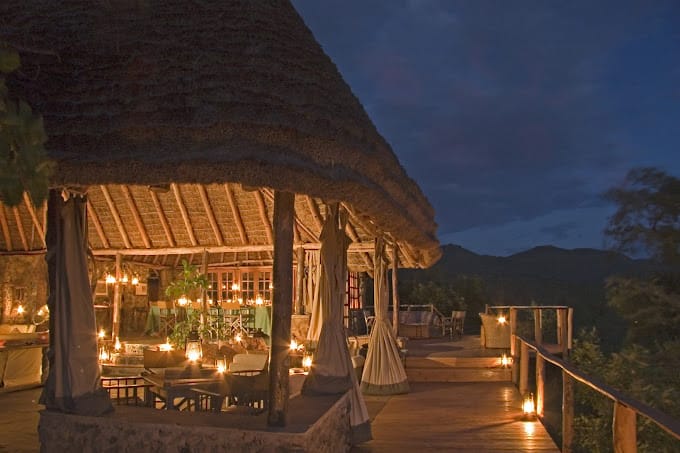
At camps like those emerging in Laikipia, the Maasai Mara, the Serengeti fringe, and the Okavango Delta, the design language has shifted. You see earth-toned materials, open layouts, low-impact structures, and craftwork sourced from nearby communities. The goal is not to impress with grandeur. It is to disappear into the environment.
Guests often arrive expecting spectacle. What they find instead is restraint. Fewer rooms. Slower rhythms. Meals that reflect regional food traditions rather than imported menus. Firelight conversations that stretch without agenda.
The luxury is not what is added. It is what is removed.
Ownership changes everything
Ownership matters more than most travelers realize.
When camps are African-owned, decisions about land use, staffing, and community relationships are not abstract. They are lived realities. Profit is not only a return on investment. It is tied to grazing routes, school fees in nearby villages, and the long-term health of ecosystems that families depend on.
This changes how hospitality feels on the ground. Staff turnover is lower. Training is often internal, passed down through mentorship. Guides are not simply employees; they are custodians of knowledge that predates tourism.
There is also a different kind of accountability. When the people running a camp live within the same ecological and social systems as their guests visit, sustainability is not a marketing phrase. It is survival strategy.
The guide is the experience
In the old safari model, the lodge was the product. In the new model, the guide often is.
A skilled guide in this generation does more than locate wildlife. They read weather patterns from the movement of birds. They track animal behavior with patience that comes from years, not seasons. They know which hills hold stories and which rivers change temperament after rain.
In northern Kenya, Samburu and Maasai guides are increasingly central to high-end safari experiences, shaping how visitors understand not just what they are seeing, but what it means. In Botswana, river-based guides in the Okavango Delta bring a quiet authority that turns a simple mokoro ride into something closer to interpretation than tourism.
The result is a safari that feels less like viewing and more like learning.
Design that listens instead of speaks
One of the clearest shifts in African-owned camps is design philosophy.
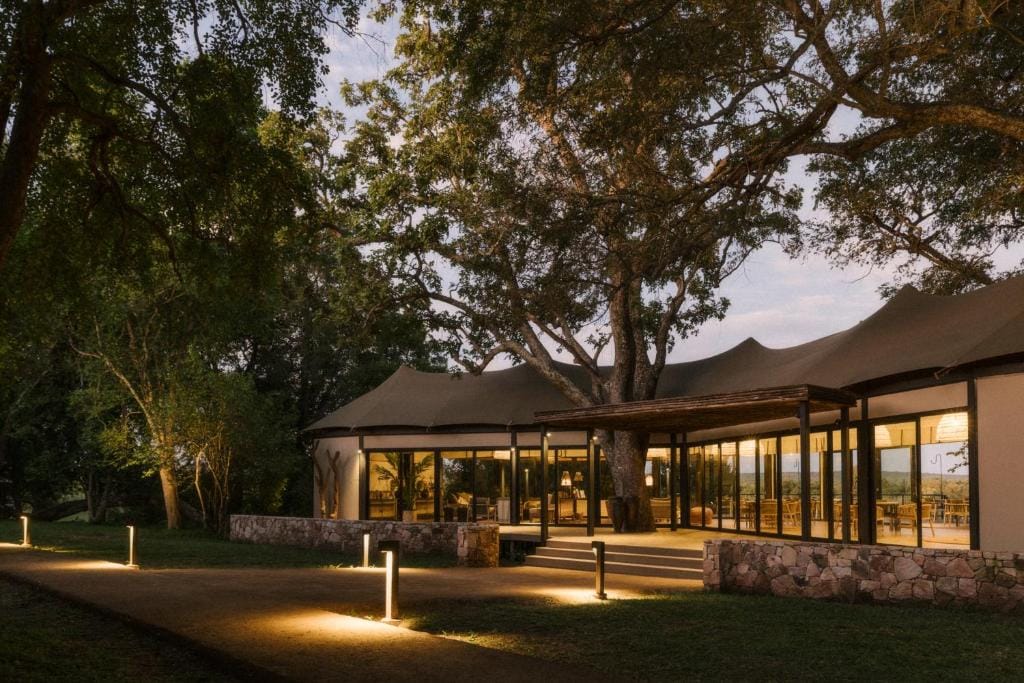
Instead of imposing architectural statements on the landscape, many new camps are built to respond to it. Structures are low, often semi-mobile or modular. Materials are sourced locally whenever possible, from stone to timber to woven elements made by nearby artisans.
In some regions, traditional building knowledge is directly influencing modern camp design. Cooling systems rely on airflow rather than heavy mechanical installation. Shade is created through orientation rather than construction excess. Water use is carefully monitored, not just for cost, but because it is finite in real terms.
This approach creates spaces that feel less like destinations and more like extensions of the land itself.
Community is not a backdrop
For decades, tourism in Africa often treated local communities as peripheral. Visible, but not central.
That is changing too.
African-owned camps are increasingly structured around partnerships with neighboring communities that go beyond employment. Revenue-sharing models, conservation agreements, and cultural knowledge exchange are becoming more common. But the more meaningful shift is less formal.
It is presence.
When a camp is built on or near ancestral land, the relationship with that land does not begin with tourism. It begins with memory. This shapes how guests are introduced to local culture. Not as performance, but as continuity.
A visit to a village is no longer framed as an excursion. It is framed as a meeting.
Conservation as lived responsibility
Conservation is often discussed as something external to tourism. Something that lodges support or fund.
In African-owned camps, conservation is frequently embedded into operations. Anti-poaching efforts, wildlife corridor protection, and habitat restoration are not separate projects. They are part of daily functioning.
In some regions, former hunters have become some of the most effective wildlife protectors, bringing tracking knowledge into conservation work. In others, camps are directly involved in protecting migration routes that pass through community land.
The relationship is not simple, and it is not always smooth. Land use is complex. Wildlife and human needs overlap in difficult ways. But the important shift is ownership of responsibility. It sits closer to the people most affected by ecological change.
The guest experience is becoming quieter
Perhaps the most noticeable difference for travelers is how the experience feels.
There is less emphasis on constant activity. Game drives are still central, but the rhythm is more flexible. Long periods of sitting still are not seen as gaps in the experience. They are part of it.
Evenings are slower. Wi-Fi is often limited or intentionally minimal. Not as a gimmick, but to allow attention to shift outward again.
Guests begin to notice things that earlier safari formats often rushed past. The way light changes across acacia trees. The sound layers of a night in the bush. The behavior of animals at distances that require patience to observe.
It is a different kind of value proposition. Not more stimulation, but more depth.
A future shaped from within
The rise of African-owned safari camps is not just a business shift. It is a rebalancing of narrative.
For a long time, Africa’s wilderness experiences were interpreted, packaged, and sold largely through external lenses. That is changing as ownership, design, guiding, and conservation leadership move closer to home.
The result is not a single style of safari. It is many. From high-end minimalist camps in private conservancies to community-run eco-lodges near national parks, the range is expanding. But the direction is consistent.
Luxury is being redefined away from spectacle and toward connection.
And in that shift, something important is happening. The safari is becoming less of a performance for visitors, and more of a conversation with place.
Not louder. Not bigger. Just more rooted than before.
Copyright ©2026 Travel Digest Africa Limited| Terms and Conditions | Privacy Policy | All Rights Reserved